Coffee and cannabis are two of the world’s most widely used plant-based substances. For a lot of people, combining them has become a regular thing, whether it’s a morning ritual or an occasional boost. Users often say the mix feels clearer, more focused, or just more functional than cannabis on its own. But how much of that is real, and is there any actual health upside to putting them together?
Here’s a straightforward look at what’s going on.
Caffeine and the main compounds in cannabis work on different systems in the body that happen to overlap. Caffeine blocks adenosine receptors, which is why it cuts through fatigue and makes you feel more alert. It also bumps up dopamine signaling. THC activates CB1 receptors in the endocannabinoid system, which can bring on euphoria, a shift in perception, and sometimes that heavier, more relaxed feeling. Some research in animals suggests that when caffeine blocks certain adenosine receptors, it can actually turn up the volume on CB1 signaling in parts of the brain. That might help explain why the combination feels more rewarding for some people. Both substances raise dopamine in their own ways, which is probably part of why a lot of people describe the combo as especially good.
Coffee also seems to interact with the endocannabinoid system on its own. One study from Northwestern found that drinking four to eight cups a day lowered levels of certain endocannabinoid-related chemicals in the blood, which is the opposite of what usually happens with cannabis. So the relationship is more complicated than simple teamwork.
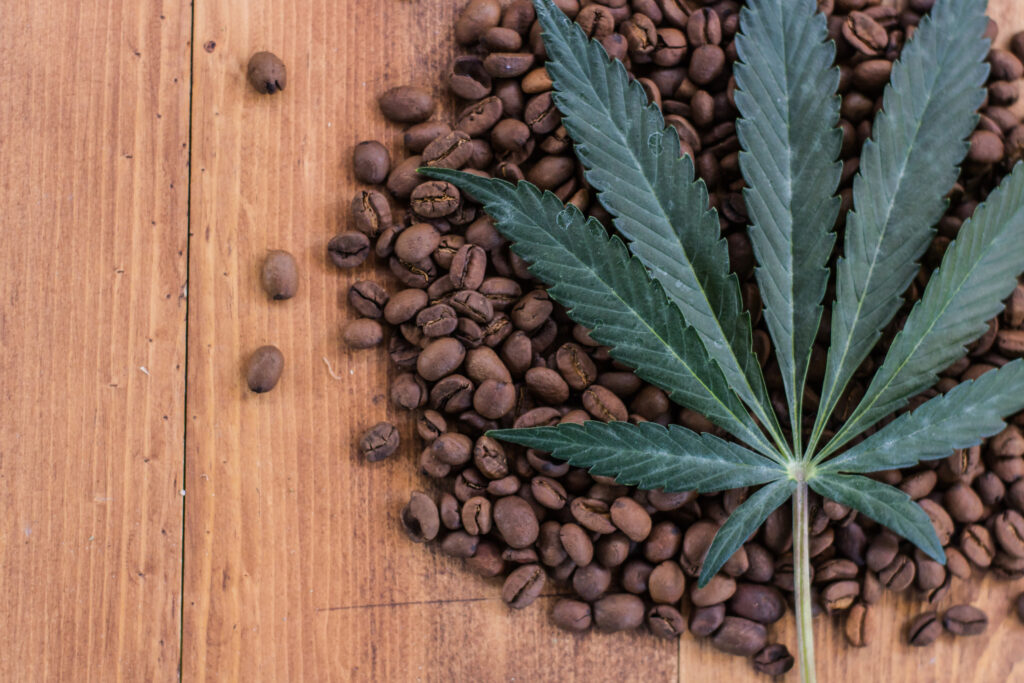
A lot of people who use both report that caffeine takes the edge off the drowsy or heavy feeling that can come with THC, making the experience feel more productive or social. Others talk about better focus, a little extra creativity, or a smoother kind of energy where the cannabis softens caffeine’s jitters and the coffee keeps the cannabis from feeling too slow. These reports are common, but they vary a lot depending on how much you take, what kind of cannabis you’re using, your tolerance, and your own biology.
The actual research is still pretty limited. A 2025 human study tested THC, caffeine, and CBD together in a controlled setting. Caffeine by itself didn’t change much about how THC felt or how the body processed it. When CBD was added into the mix, people reported stronger effects and more impairment, and blood levels of THC went up. Earlier animal studies have been mixed. One found that caffeine made short-term memory problems from a low dose of THC worse rather than better. Other work has shown increases in certain neurotransmitters when both were given together.
Coffee on its own has a solid track record with things like lower risk of type 2 diabetes and some liver issues, mostly thanks to its antioxidants and moderate caffeine. Cannabis has real medical uses for nausea from chemotherapy, certain kinds of pain, and specific seizure conditions. But there’s no strong clinical evidence yet that combining the two creates special health benefits beyond what each one does separately.
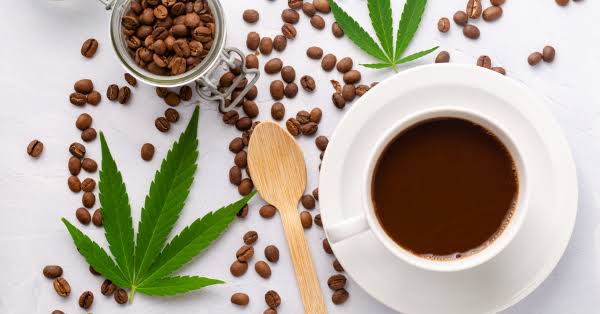
There are some real caveats. Both can raise heart rate and blood pressure, and those effects can add up. Higher amounts can amp up anxiety or make some people feel overstimulated. Even if you feel more alert, things like short-term memory and coordination can still take a hit. Everyone responds differently.
If you like the combination, most people do better keeping both sides moderate, starting low if you’re trying something new, and paying attention to how your body actually reacts. Hydration helps, and it shouldn’t be a replacement for real sleep.
Coffee and cannabis get used together so often because a lot of people subjectively get something useful out of the mix—alertness without pure stimulation, or calm without pure sedation. The biology supports some interaction, but the idea that they’re clearly good for your health as a pair still rests more on personal experience and early research than on solid clinical proof. As with anything that affects your brain and body, the smartest approach is staying informed and paying attention to what works for you.