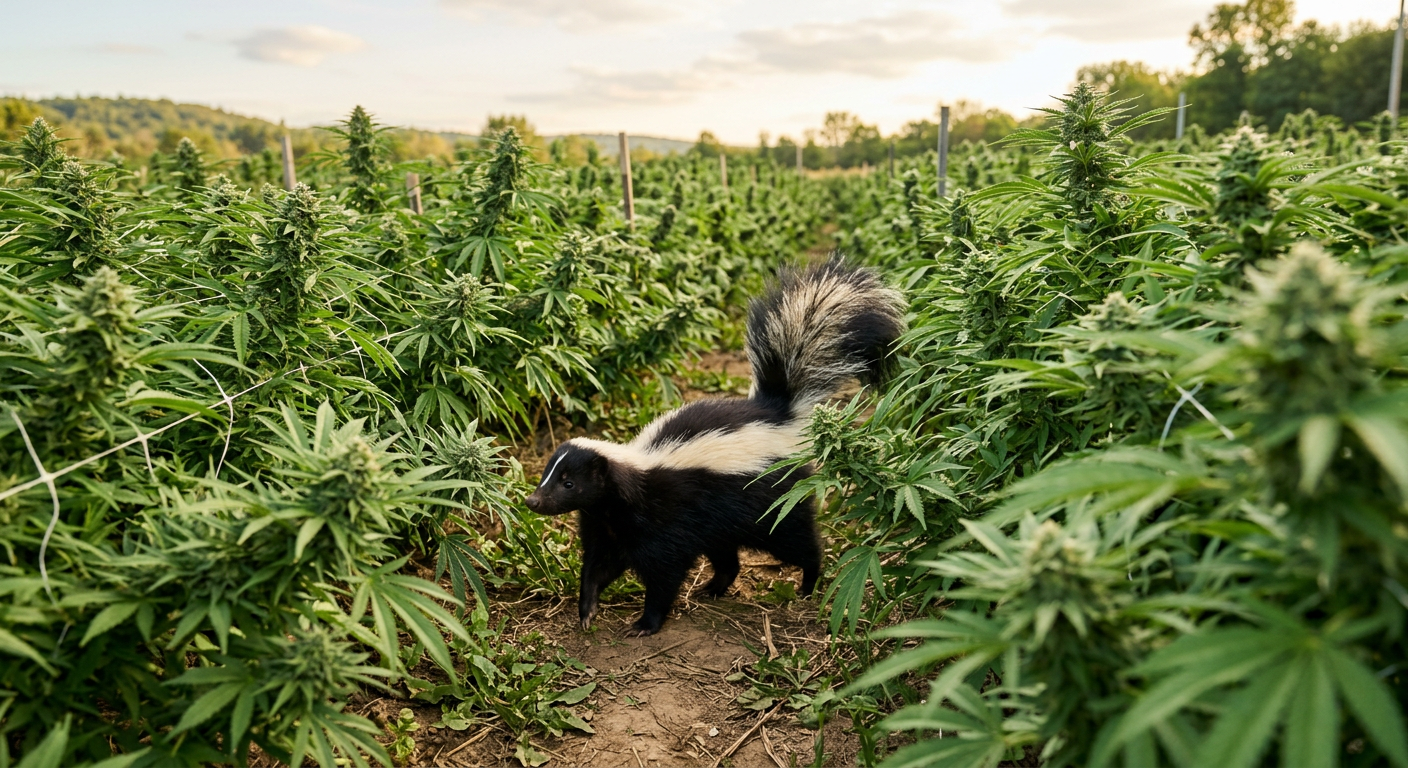
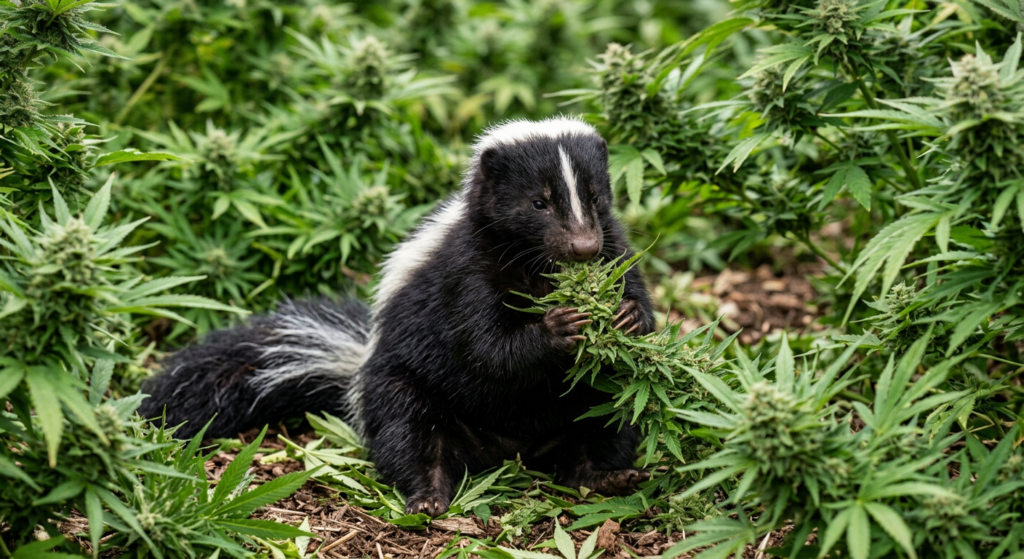
Cannabis does not smell like a skunk by accident. For years people blamed terpenes. The real punch comes from a tiny family of sulfur compounds that the human nose is wired to notice at almost absurdly low levels.
The smell everyone recognizes
Crack a jar of pungent flower and the first thing that hits you is not pine, citrus, or diesel. It is that sharp, animal, slightly rotten note people call “skunk.” Strains named Skunk, OG Kush, Gelato-family cuts, and a lot of modern gas cultivars all lean on it. Neighbors, hotel hallways, and cars notice it for the same reason: the molecules responsible travel far and they do not smell like anything else in the plant world quite so specifically.
Terpenes still matter. Myrcene, limonene, pinene, caryophyllene, and terpinolene paint the background — earthy, citrus, pine, pepper. They are the canvas. They are not the skunk.
What actually makes it skunky
In 2021, chemists analyzing cannabis flower and extracts with two-dimensional gas chromatography and a sulfur-specific detector found a new family of prenylated volatile sulfur compounds (VSCs). The standout odorant is 3-methyl-2-butene-1-thiol, also called prenylthiol, 321MBT, or VSC3.
That molecule has an intense sulfurous, skunk-like smell even when it is extremely dilute. Researchers mixed the top terpenes from a pungent cultivar (Bacio Gelato) and left 321MBT out. The blend smelled floral and vaguely cannabis-like. Add 321MBT back in and a tasting panel immediately said: that is cannabis. By itself, at a distance, it already smells like the plant.
The same compound is famous in brewing. Beer in clear bottles that sits in sunlight forms 321MBT and becomes “skunked.” Related thiols are also the reason actual skunk spray is so memorable. Cannabis, lightstruck beer, and skunk defense chemistry all live in the same neighborhood of sulfur chemistry.
Why a trace amount is enough
These VSCs are present at vanishingly small levels — often well under 0.05% of the volatile mix, sometimes parts per billion or trillion. Thiols are some of the most potent odorants known. The human nose evolved to detect sulfur compounds because they signal decay, danger, and certain foods. Garlic, onion, durian, and rotten eggs work on the same principle. A little 321MBT goes a very long way. That is why a sealed bag can still perfume a room, and why lab instruments missed these molecules for so long: they were looking at abundant terpenes, not the sulfur trace that actually carries the signature.
Other prenylated VSCs ride along. Some add more gas and savory depth. Some smell garlic-adjacent. Later work found a second cluster of tropical thiols (3-mercaptohexyl types) that push grapefruit, passion fruit, and candy notes in cultivars like Tangie or Papaya. Skatole, a pungent compound also found in other natural sources, shows up in some savory or “chemical” profiles. The skunk note is one layer in a mix, not the whole bouquet.
When the smell shows up
321MBT and its relatives are not constant through the plant’s life. Concentrations rise sharply in late flower, peak during curing, then drop after about a week of storage as the most volatile molecules evaporate. That matches what growers already know: the loudest smell often arrives at the end of the cycle and in a fresh cure, then softens if the flower sits open or is stored poorly. Extracts can retain a lot of the same sulfur compounds, which is why some concentrates still reek even after the plant material is gone.
Why some strains smell like a skunk and others do not
Genetics and harvest timing decide which VSC family dominates.
- Prenylated VSCs, especially 321MBT, drive classic skunk, gas, and diesel.
- Tropical thiols drive citrus and fruit-forward exotics.
- Terpene ratios still shape the rest: piney, earthy, sweet, floral.
A high-myrcene plant without much 321MBT will smell musky and herbal, not like a skunk. A gas-heavy OG with a strong thiol load will announce itself down the hall. Breeders and extractors who can measure these compounds can now chase or suppress the note on purpose instead of guessing from terpene charts alone.
The short version
Cannabis smells like a skunk because it makes the same kind of sulfur molecules that make skunk spray and sunstruck beer so unmistakable. The main actor is 3-methyl-2-butene-1-thiol. Terpenes dress the room. The thiols walk in and take over. That is why the smell is so specific, so loud at tiny doses, and so hard to confuse with anything else.