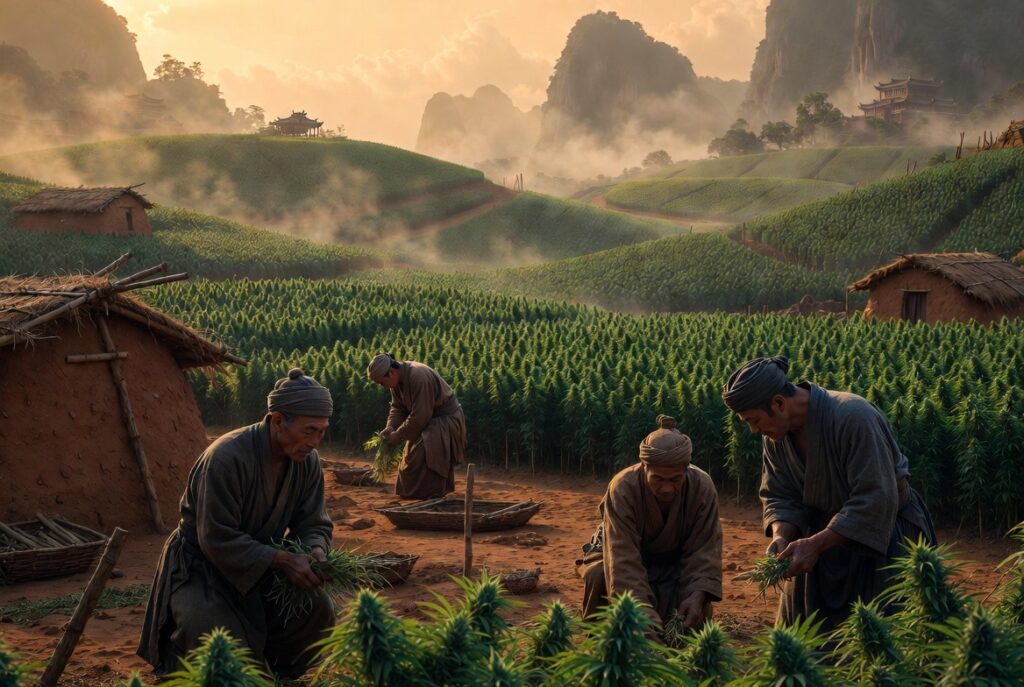
A groundbreaking new study from Chinese researchers is rewriting what we thought we knew about cannabis history. Far from being a marginal or ritual-only plant, cannabis (hemp) was an “indispensable” staple crop deeply woven into everyday life in ancient northern China.
Published in the Journal of Archaeological Science, the research from Shandong University analyzed 132 phytolith samples (microscopic plant silica structures) from two Late Neolithic settlements: Beitaishang and Qianzhongzitou. The results were striking. By the Longshan period (roughly 4,500–4,000 years ago), cannabis had become a core part of the agricultural system alongside rice, millet, barley, and soybean — essentially one of the “five grains” that sustained ancient communities.
Evidence of Everyday Use
The team found cannabis phytoliths in an incredibly high percentage of samples:
- Beitaishang site: 68.8% of samples from the Longshan period
- Qianzhongzitou site: 72.3% in Longshan period samples and 51.6% in the later Yueshi period
These weren’t rare ritual finds. The phytoliths came from everyday archaeological features like ash pits, house floors, and building foundations. This points to routine seed processing and consumption at the household level — meaning cannabis was a regular part of people’s diets and material culture.
The researchers concluded:
“Cannabis processing and consumption were deeply integrated into the daily lives of the inhabitants, making it an indispensable component of their agricultural subsistence.”
This challenges earlier views that downplayed cannabis’s economic importance due to limited surviving organic remains. The new phytolith evidence paints a much clearer picture of systematic cultivation and use.
Food & Fiber, Not Psychoactive Effects
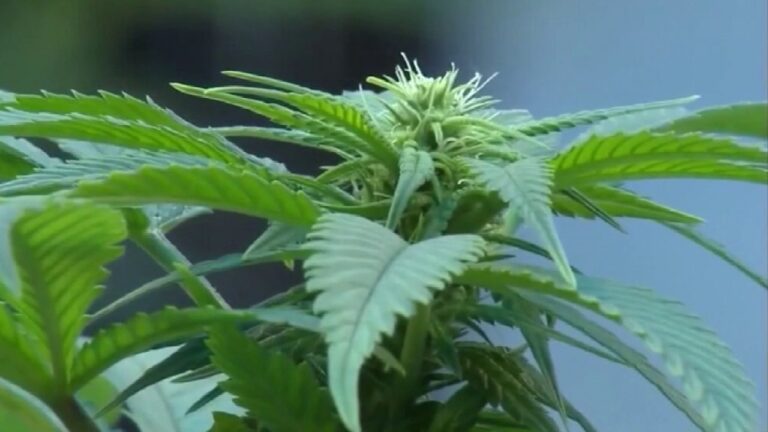
Importantly, this study focused on fiber-type cannabis (low-THC hemp), used primarily for food (seeds) and fiber (stalks for textiles and rope). This contrasts with other archaeological finds across Eurasia, where cannabis remnants in tombs often suggest ritual or psychoactive use.
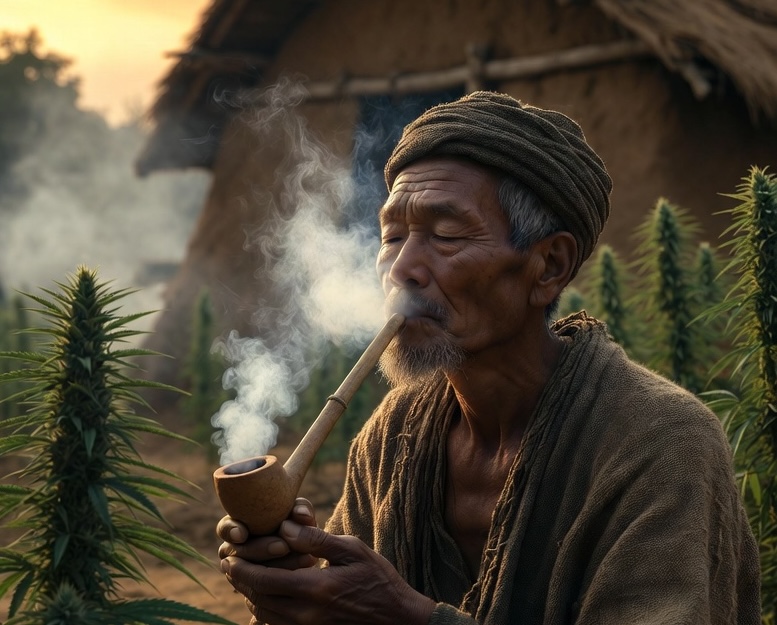
The distinction highlights how different cultures used the plant in different ways — in Shandong, it was a practical, everyday crop that supported daily survival and economy.
Modern Context from the Researchers
One of the study authors, Yong Ge, emphasized in correspondence that the research team supports China’s strict stance against drug abuse and focused exclusively on non-psychoactive hemp varieties. China maintains very tight controls on cannabis, even extending to low-THC hemp derivatives in recent years.
Why This Matters Today
This discovery adds to a growing body of evidence showing humanity’s relationship with cannabis stretches back thousands of years — for food, fiber, medicine, and more. It reminds us that the plant has been a valued agricultural resource long before modern debates about legalization.
For anyone interested in cannabis history, agriculture, or ancient civilizations, this study is a fascinating reminder of how central hemp once was to human societies.
What do you think? Does learning about cannabis as one of the “five grains” change how you view its place in history? Drop your thoughts in the comments.
Sources: Journal of Archaeological Science study via Marijuana Moment. All key findings and quotes drawn from the original research.